
Introduction
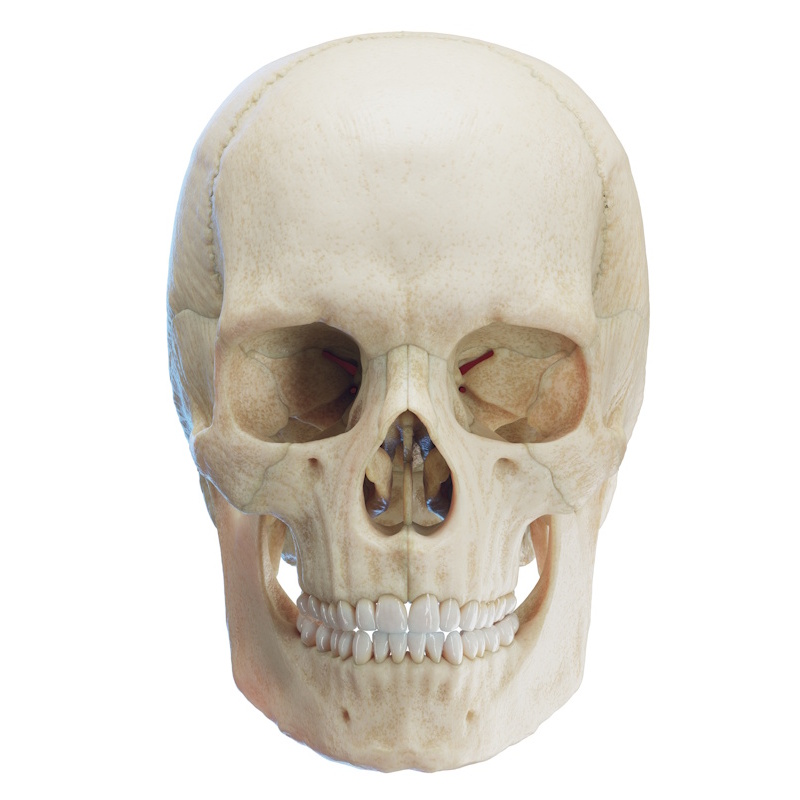
The vomer is an unpaired, thin, trapezoid-shaped bone located in the median sagittal plane of the nasal cavity. Together with the ethmoid bone, it forms the bony nasal septum (specifically forming its posterosuperior and inferoposterior boundaries; the vomer forms the posteroinferior portion - Author's note). It articulates with six bones: the two maxillas, the two palatine bones, the ethmoid bone, and the sphenoid bone.
Anatomical Features of the Vomer
- Vertical / Perpendicular plate (lamina perpendicularis): The main thin bony plate contributing directly to the formation of the nasal septum.
- Wings of the vomer (alae vomeris): Paired lateral expansions projecting from the superior border that fit against the sphenoid bone.
- Vomerine groove (sulcus vomeris): A paired groove running obliquely along both lateral surfaces of the bone, housing the nasopalatine nerve and sphenopalatine vessels.
- Vomerine crest (crista vomeris): A small ridge situated on the posterior aspect of the bone.
Borders (Margins)
- Superior (Sphenoidal) Border (Margo superior): Via the alae of the vomer, this border articulates superiorly with the body of the sphenoid bone (specifically the sphenoidal rostrum).
- Anterior (Ethmoidal) Border (Margo anterior): The longest border. Its superior portion articulates with the perpendicular plate of the ethmoid bone, while its inferior, more anteriorly placed portion articulates with the septal nasal cartilage (cartilago septi nasi).
- Inferior Border (Margo inferior): Articulates with the combined median nasal crest formed by the palatine processes of the maxilla and the horizontal plates of the palatine bones.
- Posterior Border (margo posterior): A free, concave, smooth border that faces posteriorly toward the nasopharynx, dividing the posterior nasal aperture into the left and right choanae.