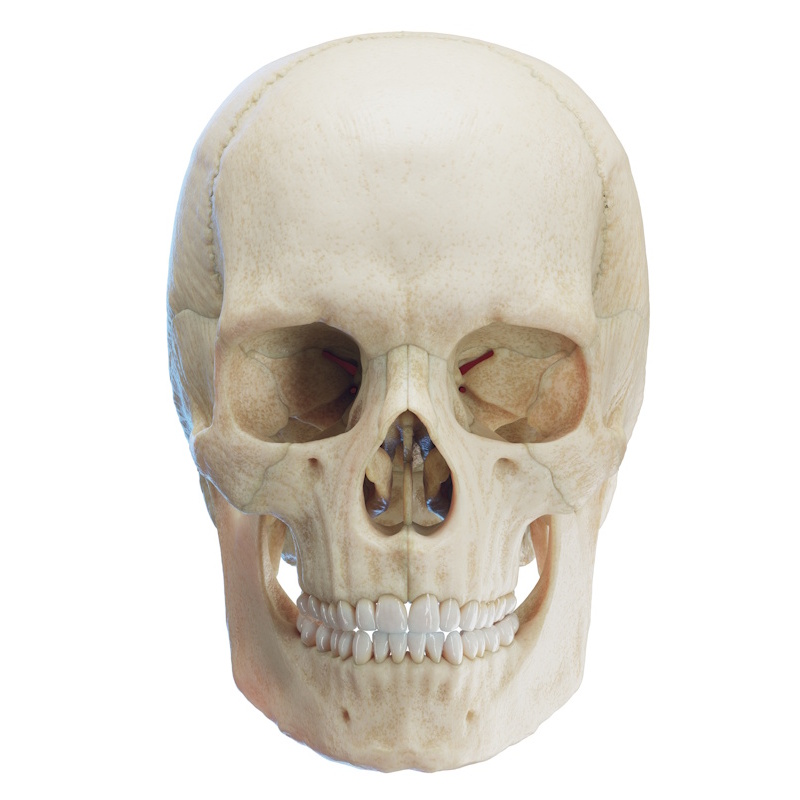

Complications following tooth extraction range from localized, self-limiting sequelae to severe surgical emergencies, categorized by their timing and underlying etiology.
Immediate & Intraoperative Complications
- Neurovascular Injury: Direct trauma or compression of the inferior alveolar nerve (IAN) or lingual nerve during mandibular molar extractions, resulting in temporary or permanent lip, chin, or tongue paresthesia.
- Oroantral Communication (OAC): Perforation of the maxillary sinus floor during extraction of upper posterior teeth, occurring most frequently when roots protrude directly into the sinus pneumatization zone.
- Anatomical Displacement: Unintended displacement of root tips or whole teeth into adjacent fascial spaces or body cavities, such as the maxillary sinus, infratemporal fossa, or submandibular space.
- Structural Fractures: Fracture of the surrounding alveolar bone, maxillary tuberosity, or—in rare instances of deep impactions or severe atrophy—the mandible itself.
- Intraoperative bleeding: Maybe oozing or if damaging a blood vessel more serious.
Early Postoperative Complications (1–7 Days)
- Alveolar Osteitis ("Dry Socket"): Premature fibrinolysis or dislodgement of the blood clot, leaving exposed, unvascularized bone walls. Presents 3–5 days post-extraction with severe, radiating pain and halitosis.
- Secondary Hemorrhage: Persistent oozing or active bleeding occurring past 24 hours, triggered by localized clot breakdown, unmanaged hypertension, systemic coagulopathies, or early resumption of negative oral pressure (e.g., smoking, straw use).
- Surgical Site Infection: Localized abscess formation or spreading facial space infection (e.g., Ludwig's angina), characterized by localized warmth, progressive facial edema, purulent exudate, and fever.
- Severe Trismus: Marked restriction in jaw opening resulting from surgical trauma or post-injection muscle spasm involving the pterygo-masseteric complex.
Late & Chronic Complications
- Oroantral Fistula (OAF): An epithelialized tract connecting the oral cavity to the maxillary sinus resulting from an untreated or unhealed OAC, presenting with chronic maxillary sinusitis and fluid regurgitation into the nasal cavity.
- Osteonecrosis (MRONJ / ORN): Failure of socket healing leading to exposed, necrotic bone lasting longer than 8 weeks, seen in patients with history of antiresorptive therapy (MRONJ) or head and neck radiation (ORN).
- Bony Sequestration: Irritation and non-union of thin bone spicules, leading to spontaneous painful exfoliation of avascular cortical fragments through the socket mucosa.